
How to identify and avoid student loan scams
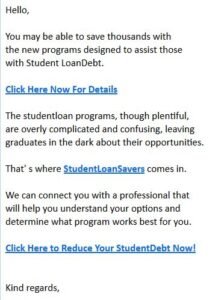
Student loan debt can feel overwhelming. Scammers know this and use your financial stress as a weapon. They create sophisticated ads that promise immediate relief, but these offers are often predatory traps designed to steal your money or identity.
Data shows that student loan fraud is a multi-million dollar industry. According to the Federal Trade Commission, consumers lose millions annually to debt relief scams. You must treat every unsolicited offer for loan forgiveness with extreme skepticism. If a deal sounds too good to be true, it is likely a fraud.
The mechanics of dishonest loan advertising
Most dishonest ads rely on the psychology of urgency. They claim you have a limited time to enroll in a special forgiveness program. Legitimate federal loan programs, such as Income-Driven Repayment (IDR) plans, never have an expiration date for enrollment.
Think of these ads like a digital shell game. The scammer shows you a professional-looking website to build trust. Once you input your personal details, they sell that data to third-party brokers. These brokers then bombard you with unsolicited calls, texts, and emails. You are essentially paying for your own harassment by engaging with these sites.
The truth about upfront fees
Never pay a company to help you with your federal student loans. All federal loan management, including consolidation and forgiveness application, is free through StudentAid.gov. If a company asks for a fee to process your application, stop immediately.
Requesting an upfront payment is the primary red flag of a scam. In some cases, victims have reported losing over 2,000 USD in fake administrative fees. Legitimate services are government-operated; they do not collect money to process your paperwork.
Identifying digital phishing tactics

Phishing remains the most dangerous threat to your financial security. Scammers use emails that mimic the branding of the Department of Education. They often include links that lead to fake login pages designed to capture your FSA ID.
Your FSA ID is your key to your federal student loan records. If a third party gains access to it, they can change your contact information and redirect your loan billing. Treat your login credentials like your house keys; you would not hand your keys to a stranger just because they are wearing a uniform.
Checklist for verifying legitimacy
- Does the website address end in .gov? If not, do not enter your data.
- Does the email address match the official department domain? Look for hidden characters.
- Are there spelling errors or aggressive sales language in the text?
- Does the site demand payment via gift cards or wire transfers?
- Does the ad claim to have a direct line to the President’s forgiveness programs?
Field notes: Mistakes to avoid
A common error is trusting a website based on its search engine ranking. Scammers pay for sponsored ads that appear at the top of Google or Bing search results. Being at the top of a search page is not a proof of legitimacy; it is only proof that the company has an advertising budget.
Another mistake is sharing your loan details on social media groups. You might think you are getting advice from peers, but scammers monitor these forums. They identify people who are behind on payments and contact them privately to offer fake solutions. Always keep your financial discussions strictly private and restricted to official channels.
What to do if you are targeted
If you encounter an advertisement that seems fraudulent, do not click the link. Instead, report the ad to the platform hosting it. If you have already shared personal information, you must act quickly to limit the damage.
Follow these steps to secure your identity:
- Freeze your credit report with the three major bureaus (Equifax, Experian, and TransUnion) to prevent identity theft.
- Change your passwords for your loan accounts and your primary email address.
- Enable multi-factor authentication (MFA) on all financial accounts to add an extra layer of security.
- Contact your actual loan servicer directly using the phone number on your official monthly billing statement.
Handling your student loans requires patience and direct communication with your lender. There is no middleman needed to manage your debt. By avoiding third-party sites and sticking to official government resources, you eliminate the risk of falling for a scammer’s promises.
content updated on 2026-08-23





Hello, its nice piece of writing about media print, we all be aware of media is a enormous source of facts. Gaynor Wilhelm Cantu
There is certainly a lot to know about this subject. I like all of the points you have made.