
Users of Gmail, Google’s email, are victims of phishing attempts
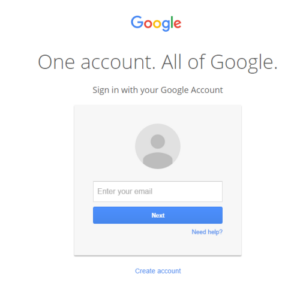
Google’s ecosystem is often perceived as impenetrable due to its robust security filters. However, Gmail users remain primary targets for sophisticated credential harvesting campaigns. Unlike generic spam, these attacks leverage social engineering and technical deception to bypass your natural vigilance.
Think of your Gmail login page like the front door of your house. Phishing is a professional burglar wearing a fake uniform, convincing you they are a locksmith who needs to see your key to verify its integrity. Once you hand it over, they have full access.
The Anatomy of Modern Gmail Phishing
Recent campaigns have evolved beyond simple fake bank alerts. Attackers now employ a tactic known as session hijacking via OAuth token theft or pixel-perfect credential cloning. This process targets the trust you place in established services like Google Drive.
Here is how the attack chain typically unfolds:
- Initial Compromise: Attackers gain control of a legitimate account within your contact list.
- The Lure: You receive an email from someone you trust, requesting you to view a shared document via Google Drive.
- The Redirect: The link leads to a domain that visually mimics the Google login interface.
- Credential Harvesting: You enter your credentials, and the attacker captures them in real-time.
- Persistence: The attacker uses your session cookies to bypass Two-Factor Authentication (2FA) entirely.
Why Skilled Users Fall Into the Trap
The most dangerous aspect of these attacks is their psychological framing. Because the link appears to originate from a known contact, your brain bypasses its standard security assessment. We often associate ‘familiar’ with ‘safe’.
Even tech-savvy users fall victim because attackers have mastered the art of URL obfuscation. They use Punycode—where characters from different alphabets look identical to Latin ones—to create domains that appear authentic at a glance. If you are not hovering over the link to inspect the actual destination, you are already vulnerable.
Tactical Defense: Protecting Your Gmail Identity
You must move beyond relying solely on spam filters. Security is an active process, not a passive status. Implement these professional-grade habits immediately to harden your account against unauthorized access.
Use Hardware Security Keys
Software-based 2FA (like SMS codes or push notifications) can be intercepted by phishing sites. A physical FIDO2 security key acts as a cryptographic handshake that cannot be phished. It verifies that you are interacting with the legitimate Google domain, not a clone.
The Browser URL Inspection Rule
Before entering any password, physically click into your browser address bar. Check the domain name carefully. If you are on an official Google property, it must end in google.com. If you see a weird domain like ‘drive-share-docs.net’, close the tab immediately. This is the simplest, most effective way to spot a fraudulent page.
Audit Your Connected Apps
Many phishing attempts do not just steal passwords; they ask for permission to access your mailbox via OAuth. Go to your Google account settings and review your ‘Third-party apps with account access’. Remove anything you do not actively use. This limits the blast radius if an account is compromised.
Field Experience: Mistakes to Avoid
The most common mistake I see on the field is the ’emergency response’ error. When you receive a panicked email from a friend saying they need you to open a file immediately, your stress levels spike. Attackers count on this rush.
- Never act in haste: If an email feels urgent, it is likely malicious. Slow down.
- Verify out-of-band: Send a quick text or call the sender to ask if they actually sent the file.
- Check for context: If the email style does not match how that person usually communicates, assume it is compromised.
Phishing is not a technical failure of Gmail; it is a manipulation of human behavior. By slowing down your interaction with digital requests and using hardware-backed security, you transform yourself from an easy target into a hardened endpoint that attackers cannot easily exploit.
Content updated on 2026-08-22




i suspect this as a scammer..he is using the name of Jake Norman, met him in smule and we have been communicating in hang-out until now
Noemt zichzelf Aaron Abbott zolang hij in t leger zit maar zodra hij eruit komt neemt hij de naam Robert de ligt aan, de naam van zijn moeder
see below
Hi, I got a friend request on facebook from a Lucas Ferguson, 58, pretending working on an oil rig in Alaska and having a daughter on boarding school in London. He insisted changing conversation on Google Hangout and after erased his fb-profile. After a while of love-blabla and planning to live together (he said to get retired soon and will get a 1.2 Million paycheck), his “daughter” Rose started corresponding with me on gmail, mentioning an important project at school and that she needs a computer of her own. At the day of the project, she wrote again, claiming on having the money immediately.
Mai adresses used are: lucasferguson461@gmail.com abd roselucasferguson1@gmail.com
They used various photos, which I will send you separately. They must be psychologically trained, but not too clever, because the story told show various logical mistakes. Faced with this faults and accused of scamming, he reacted disappointed an then made a video-call on hangout, where his face can’t be recognized (big pixels). The voice was of a younger african man, with a dog and birds and people talking in the background. After telling him, that I have no money, the call disconnected. That’s it. There must be various people involved. I found the pics are often used in the net on various plattforms, recently on instagram as Gordon Stevenson.
Thanks for publishing!
Ese tipo es un abogado y político en Brasil, efectivamente esa es su hija se llama Raquel